Trillium: A Designer’s Review for Real Projects
As a designer who spends more time staring at stitch maps than finished garments, I have learned that the difference between a good machine embroidery design and a great one often lies in the details we overlook during the initial excitement. When I first loaded the Trillium file into my software, I wasn’t looking for flashiness. I was looking for reliability, aesthetic balance, and versatility. In the world of Single Flowers, it is easy to find designs that are either too simplistic to hold interest or so complex they become a nightmare to stitch on textured fabrics. Trillium sits comfortably in that sweet spot, offering a botanical elegance that feels both modern and timeless.
First Impressions: Mood and Visual Personality
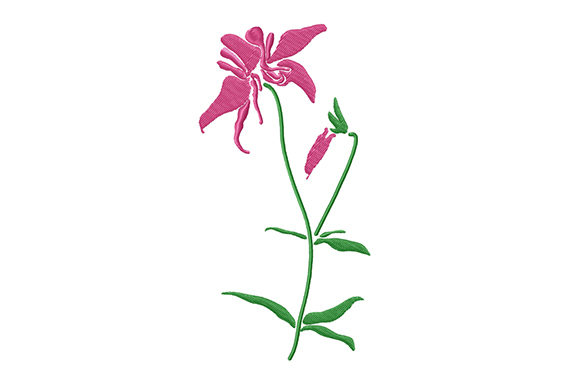
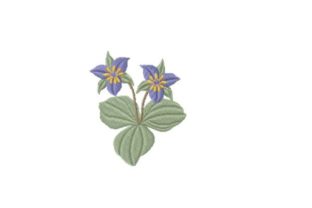
The immediate impression Trillium gives is one of understated grace. It does not scream for attention; rather, it invites a closer look. The layout is organic, avoiding the rigid symmetry that often makes floral Embroidery look dated or mass-produced. For a designer, this is crucial. When you are creating a handmade product, you want the design to feel like an intentional artistic choice, not just a default clip-art insertion.
The visual personality of Trillium is soft yet defined. Depending on how you manipulate your thread colors, it can shift from a vibrant spring motif to a muted, vintage-inspired accent. This adaptability is what makes it a strong candidate for various design assets in a creative entrepreneur’s library. It lacks the heavy, blocky appearance that plagues many lower-quality files, suggesting a thoughtful approach to stitch density and direction.
The Real-World Test: From Screen to Fabric
To truly evaluate Trillium, I moved beyond the digital preview and considered its application in a real-life scenario. Imagine you are preparing a custom order for a local boutique: a set of linen tote bags intended for a spring farmers' market launch. The client wants something that says "fresh" and "artisanal" without being overly literal.
In this context, Trillium shines. Placed slightly off-center on a natural canvas tote bag design, the flower provides a focal point that draws the eye without overwhelming the material. The stitching clarity holds up well against the weave of the linen. If you were to use this same design for sweatshirt embroidery, the result would be equally compelling. On a heather grey fleece, the design retains its definition, provided you use a cut-away stabilizer to prevent distortion from the stretch of the fabric.
I also considered its use in baby embroidery. For a muslin swaddle or a simple onesie, the delicate nature of the trillium flower fits the gentle aesthetic parents often seek. However, this is where a designer’s caution must kick in. While the design is lovely, its suitability for tiny items depends entirely on the scaled-down integrity of the stitches. I always recommend testing a scaled version on scrap fabric to ensure the satin stitch borders do not become too narrow to catch properly, which can lead to fraying after washing.
Navigating Fabric and Hoop Constraints
No design is universal, and Trillium is no exception. While the description suggests it looks great on any fabric, experienced makers know that fabric texture plays a massive role in the final outcome. On smooth cottons or high-quality polyesters, Trillium will look crisp and professional. However, on highly textured materials like terry cloth or bulky knits, the finer details might get lost. In such cases, increasing the contrast between the thread and the fabric becomes essential.
Another critical consideration is the hoop size. Since Trillium is a single floral element, it likely fits within standard 4x4 or 5x7 hoops, but you must verify the specific dimensions in your digital embroidery file before purchasing. Attempting to squeeze a design that is too large into a small hoop can cause registration issues, while using a hoop that is too large for a small design can lead to fabric shifting if not hooped correctly with adequate stabilizer.
For those interested in embroidered patch creation, Trillium offers a clean edge that lends itself well to merrowed or satin borders. However, if you are stitching on curved surfaces like caps, you must account for the push-and-pull of the fabric. A design with balanced density, like this one, is generally safer for caps than heavily filled designs, but a test run on a similar curved mockup is non-negotiable for professional results.
Commercial Viability and Brand Consistency
For Etsy sellers and small shop owners, the visual appeal of a design directly impacts perceived value. Trillium exudes a level of professionalism that builds customer trust. It does not look like a free, low-resolution download found on a generic forum. This distinction is vital when you are pricing your finished product. A clean, well-digitized floral design allows you to position your items as premium goods rather than budget crafts.
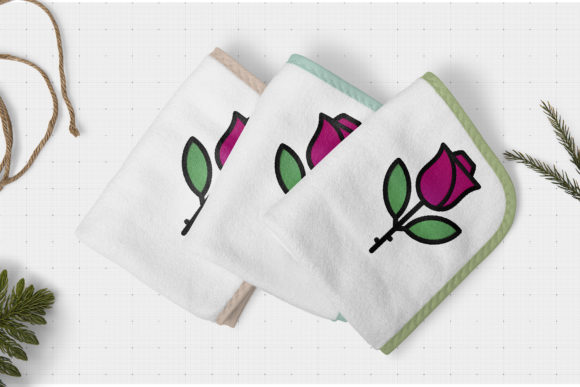
When creating printable mockup images for your online store, Trillium photographs beautifully. Its lines are distinct enough to remain visible in thumbnail images, which is crucial for click-through rates on platforms like Etsy or Instagram. Whether you are selling custom apparel, kitchen towels, or holiday gifts, the consistency of the design helps in building a cohesive brand identity. You can rotate through different color palettes—pastels for spring, deep jewel tones for winter—while maintaining a recognizable style.
Practical Notes for the Embroiderer
Before you commit to stitching Trillium on a client’s garment, here are a few practical steps to ensure success:
- Test on Scrap First: Always stitch out the design on the same type of fabric you intend to use for the final product. This reveals any tension issues or puckering.
- Check Thread Contrast: Use a black-and-white mockup to see if the design stands out. If the values are too similar, the details will vanish from a distance.
- Review Stitch Types: Look at the mix of fill stitch, satin stitch, and running stitch. Ensure the transitions are smooth and there are no excessive jump stitches that need trimming.
- Verify Licensing: If you plan to use this for commercial embroidery or sell items made with it, confirm the license terms provided with the embroidery file. Most original designs allow for finished physical products, but digital resale is typically prohibited.
- Stabilizer Selection: Match your stabilizer to your fabric. Use tear-away for stable wovens and cut-away for knits to maintain the shape of the flower over time.
Final Verdict
Trillium is a solid addition to any designer’s toolkit. It is not just a pretty picture; it is a functional, well-balanced applique design alternative that respects the limitations of home and commercial machines. It works exceptionally well for personalized gift items, boutique branding, and seasonal collections. While it requires the usual due diligence regarding fabric choice and stabilization, its versatility and clean aesthetic make it a reliable choice for both hobbyists and professional craft business owners. If you are looking for a floral element that feels authentic and stitches cleanly, Trillium is worth the investment.